Flymap guide
The window seat guide: how to get the best views on any flight
A good window seat can turn a routine hop into the best show you’ll watch all year — and a bad one puts a wing and a heat haze between you and the Alps. Picking well comes down to three things: the side of the plane, the row, and the light.
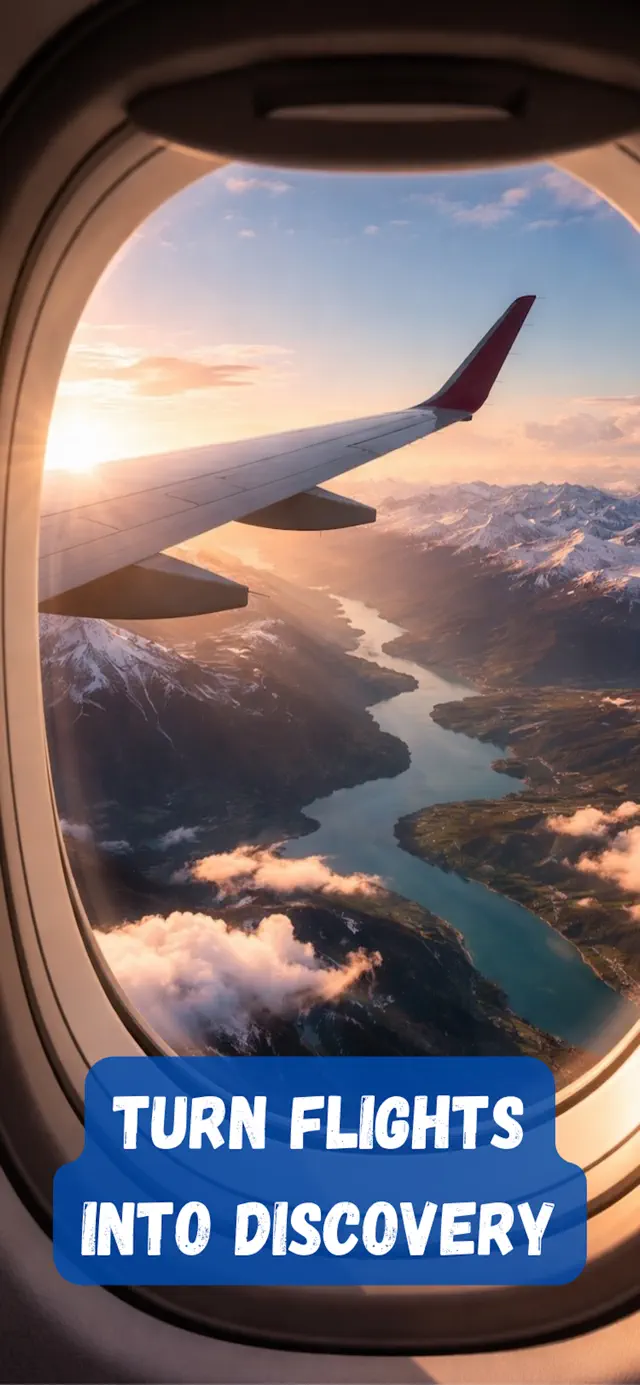
Which side of the plane should you sit on?
There’s no universal “best side” — it depends on your route and the time of day. Two rules cover most flights:
- Follow the landmarks, not superstition. Check what your route actually passes and which side it falls on. The free Flymap web map shows the corridor between any two airports and the mountains, lakes and coasts along it — preview it before you pick seats.
- Think about the sun. Flying roughly east in the morning or west in the evening puts low sun on the nose-side windows — dramatic light but strong glare. Sit on the shadow side for the clearest photos, the sun side for sunrise/sunset colour.
Pick your row: the wing problem
- In front of the wing (usually the first third of the cabin): cleanest unobstructed view down — the premium spot for landscape-watching.
- Over the wing: you’ll see sky and wing. Great for the classic wing shot, poor for geography.
- Behind the wing: good downward views again, but engine exhaust can add a wobbly heat shimmer to photos.
- Check the seat map for missing windows — a few rows on most aircraft types have a blank wall. A quick search for your aircraft type + “missing window” saves the disappointment.
Time the light
- Golden hour at altitude lasts longer than on the ground — sunset flights are reliably spectacular.
- Night flights trade landscapes for city-light constellations and, on northern routes, a real chance of aurora — sit on the north-facing side away from the moon.
- Clear-day winners: mountain crossings, coastlines, island chains, deserts. Even “boring” routes hide rivers and patchwork fields worth naming.
Know what you’re looking at
The view gets ten times better when the nameless ridge becomes the Jura and the odd round lake becomes a volcanic crater. Flymap answers “what am I flying over?” live during the flight — offline — with a timeline of what’s coming, so you know exactly when to put the film on pause and look out.
Frequently asked questions
Which side of the plane is best for sunrise or sunset?
Work out your heading first. Flying north, sunrise is on the right and sunset on the left; flying south it's reversed. For colour, sit on the sun side; for clear, glare-free views and photos, sit opposite.
What's the best row for window photos?
A window row ahead of the wing gives the cleanest downward view. Behind the wing works too, but engine exhaust can add heat shimmer. Directly over the wing blocks the ground.
How do I know which landmarks my route passes?
Preview the corridor between your airports on the Flymap web map or in the app — it lists the mountains, lakes, coasts and cities along the way, so you can choose the side of the plane that faces the good stuff.
Try it on your next flight
Get Flymap free on iPhone or Android, download your route before boarding, and see what you fly over — no Wi-Fi needed.


Flymap app
Keep reading
What am I flying over? How to identify what’s below your plane
Ways to put a name to the mysterious coastline below your window — from seatback maps to GPS apps that work in Airplane mode.
Things to do on a long flight without Wi-Fi
Seventeen genuinely good offline activities for a long-haul flight, plus the pre-boarding downloads that make them work.
Offline flight maps: see your whole route without internet
What an offline flight map is, why you should download one before boarding, and how to follow your whole route — no Wi-Fi, no roaming.